5 Best Qwilr Alternatives (2026)

Rikin Diwan··14 min read
Qwilr makes the best-looking proposals in the category. The web-page format replaces the static PDF with something interactive: embedded video, pricing tables that update live, ROI calculators, and section-level analytics that tell you when a buyer hovered on the price. For an agency or a consultancy where the proposal itself is part of the pitch, that buyer-side experience is a real edge.
But Qwilr is a proposal tool first and an everything-else tool second. Pricing starts at $35 per user per month on the Business plan, billed annually, and scales per seat from there. Add three people and you are paying $105 a month before any add-ons. The signing experience is competent but secondary to the proposal output, and the web-page format does not fit every buyer or every document type. Some procurement teams still want a PDF they can file, redline, and attach to a vendor record. Some contracts (NDAs, vendor agreements, hiring docs) are not pitches at all and look strange dressed up as one.
The deeper problem is fit beyond proposals. Most teams send a mix of documents, and Qwilr only makes sense for the subset of them that are sales-shaped. For the rest (the contract that comes after the proposal, the NDA before it, the routine paperwork that runs the company) Qwilr is overkill and the per-seat price compounds.
Most teams that look for a Qwilr alternative are not abandoning the idea of a polished proposal. They want a product that handles the full range of documents a small or mid-sized company actually sends, at a price that does not scale linearly with the team. These are the five strongest candidates in 2026.
Quick Comparison: Qwilr Alternatives
| Tool | Best For | Lowest Paid Tier | Envelopes / mo |
|---|---|---|---|
| Qwilr | Designed proposals with embedded media | $35/user/mo (annual) | Unlimited |
| Popform | AI-native contract management that works inside Claude and ChatGPT, one plan, no per-envelope fees | $11/user/mo (annual) | Unlimited |
| DocuSign | Incumbent with the broadest enterprise procurement footprint | $11/mo (Personal, annual) | 5 |
| PandaDoc | Sales teams sending proposals and quotes inside a CRM motion | $19/user/mo (annual) | ~9 (110/year cap on Starter) |
| Documenso | Open-source self-hosted e-signature | $25/mo (hosted Individual) | Unlimited |
| Agree | Contract-to-cash automation with AI agents | $599/mo (Growth) | Unlimited |
1. Popform: Best Overall Qwilr Alternative
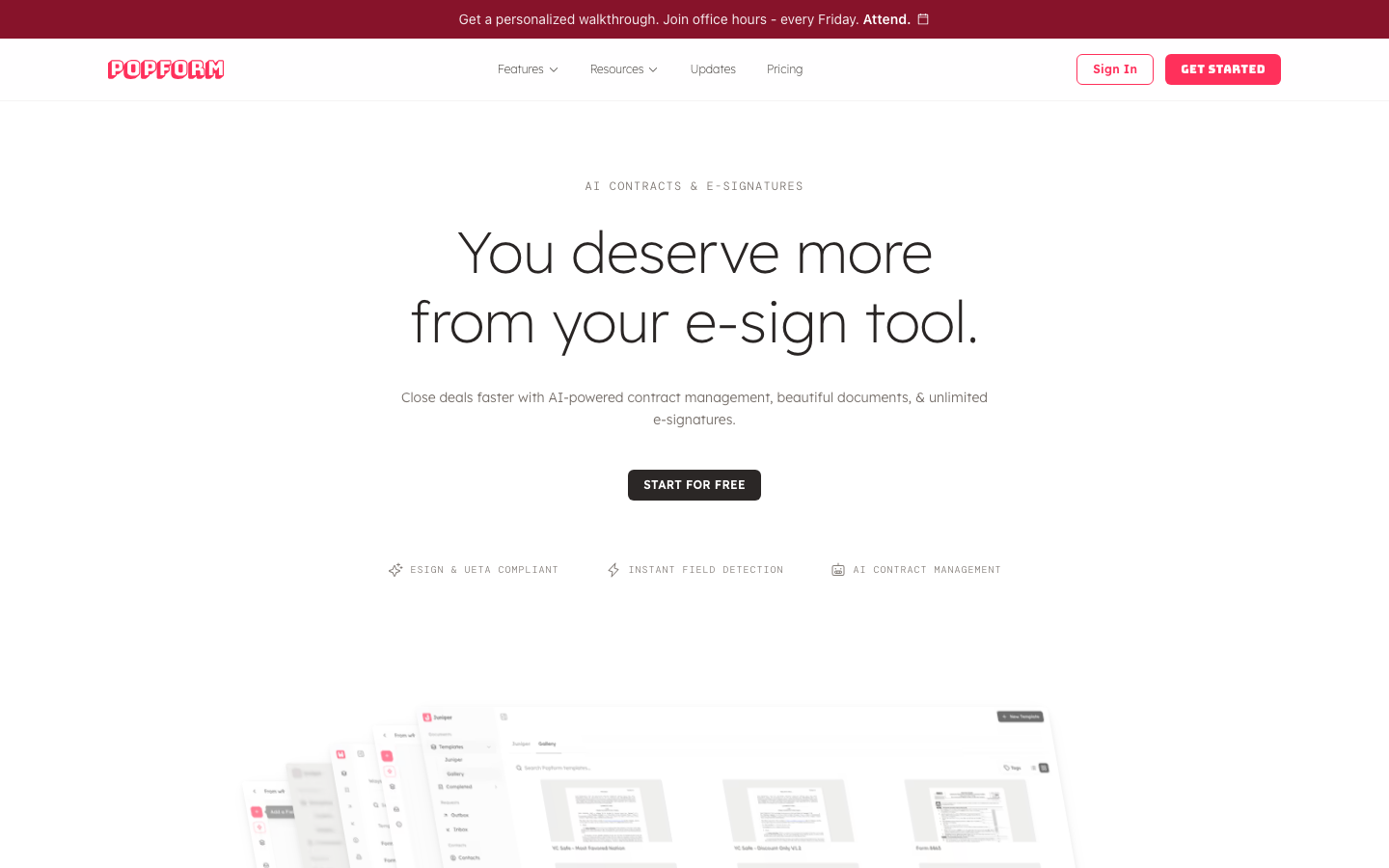 Popform: AI contracts and e-signatures
Popform is a modern e-sign and contract management tool with AI handling the parts that used to take a human. Upload an existing PDF, such as a contract, NDA, MSA, or order form, and Popform's AI detects the signature fields, assigns the right recipients, and pulls the key business terms back out of the signed copy. No manual field placement, no per-envelope math.
You do not have to start from a PDF, or even from inside Popform. Draft a new proposal or agreement from a prompt in Popform's editor, which supports both PDFs and markdown. Or connect Popform to Claude, ChatGPT, Grok, Perplexity, or Mistral through the Popform MCP and ask your assistant to create the document, send it for signature, check on its status, and pull key information out of everything you have signed.
What Popform does well:
- Connects to Claude, ChatGPT, Grok, Perplexity, and Mistral through the Popform MCP, so you can create documents, send for signature, check statuses, and ask questions of your contracts from the assistant you already use
- Goes from prompt to proposal in an editor that supports both PDFs and markdown
- AI detects signature, date, name, and amount fields automatically from any uploaded PDF
- AI assigns recipients based on what the document says, with no rules to configure
- AI extracts business terms (start and end dates, amounts, payment terms, renewal terms) from signed agreements
- Shareable links and activity tracking at every step toward signature
- Auto-organizes signed contracts by contact, company, and document category
- One plan: $11 per user per month billed annually, unlimited e-signatures, all AI features included
- ESIGN and UETA compliant
What Popform doesn't do: Popform is not a proposal-design tool. There is no web-page output, no embedded video or interactive pricing, no section-level engagement analytics. If your proposals are the centerpiece of the pitch and the buyer-side experience is part of how you win deals, Qwilr's product is purpose-built for that. Popform handles a plain proposal drafted from a prompt, the contract that comes after, and the long tail of documents that are not pitches at all.
Pricing: One plan, $11 per user per month billed annually. No free tier (14-day free trial, no credit card required). Unlimited e-signatures and all AI features included.
Best for: Small and mid-sized teams sending sales contracts, NDAs, hiring docs, and vendor agreements without a dedicated contract function.
The tradeoff vs. Qwilr: You gain AI that does the setup work on any PDF, contracts you can create and query from your AI assistant, a price of $11 per user per month against Qwilr's $35, and a product that handles the full mix of documents your company sends. You give up Qwilr's interactive web-page proposal output and the design-forward buyer experience that goes with it.
2. DocuSign: Best for Enterprise Procurement
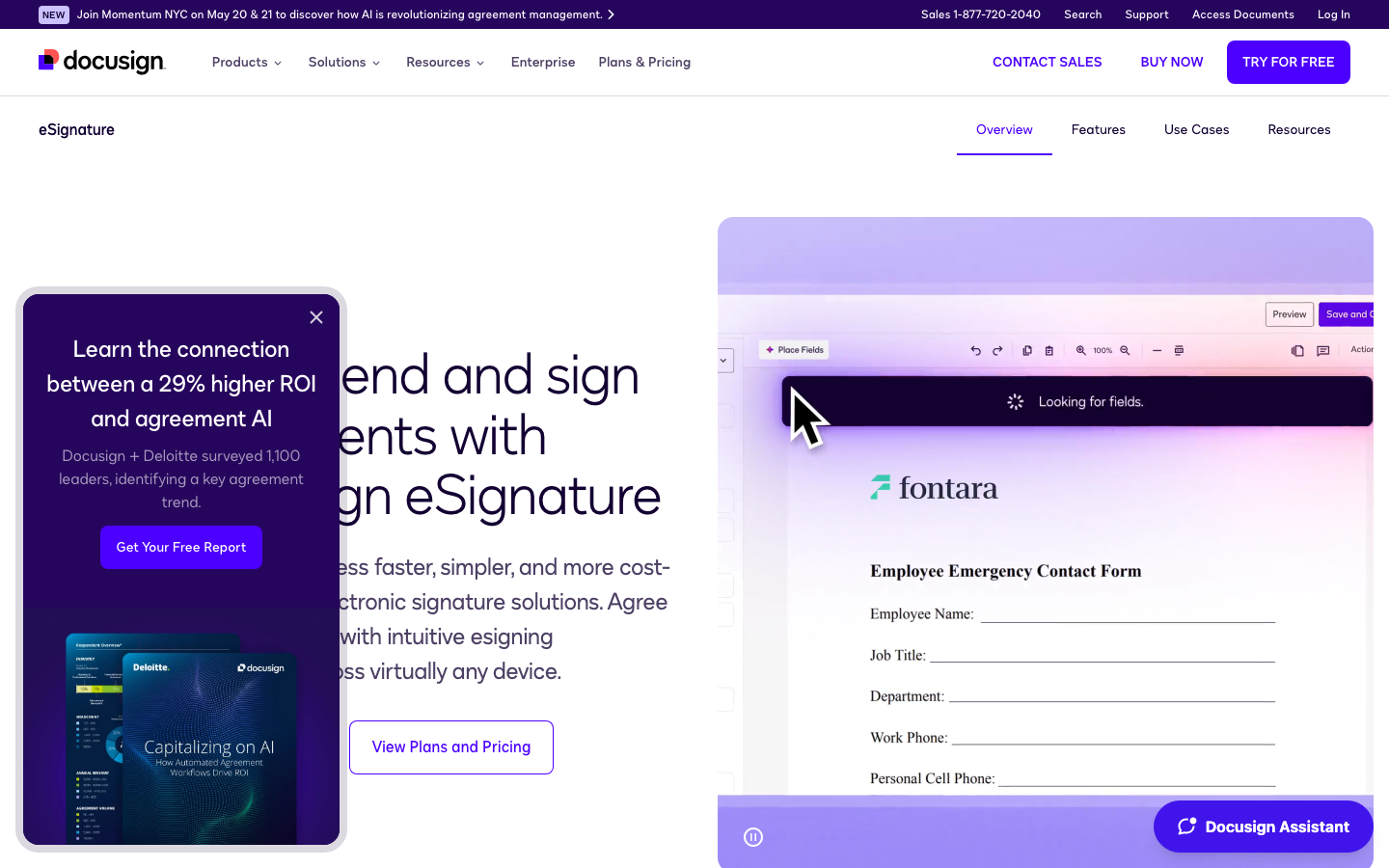 DocuSign: easily send and sign documents
DocuSign is the category incumbent. It is the brand procurement teams at large enterprises already trust, the one that shows up in every RFP, and the one with the deepest ecosystem of integrations across enterprise IT stacks.
What DocuSign does well:
- Universally recognized brand inside large enterprise procurement
- Deepest integration ecosystem with enterprise IT (Salesforce, Microsoft, SAP, Workday, Oracle)
- Mature compliance posture (SOC 2, HIPAA, eIDAS, 21 CFR Part 11, FedRAMP)
- Established audit trail and legal defensibility
- Multi-language signing experience across 40+ languages
What DocuSign doesn't do: DocuSign is built for a moment when getting a PDF signed and stored was the entire job, and the product reflects that. The interface feels dated, sending a single document still requires operating an enterprise platform, and pricing scales faster than usage. Per-envelope limits and per-seat fees push small teams into plans built for thousand-person organizations.
Pricing: Personal $11/mo (annual, 5 envelopes/mo). Standard, Business Pro, and Enterprise plans available on the DocuSign pricing page. AI data extraction costs extra: it requires a separate IAM plan, from $45/user/mo (annual).
Best for: Mid-market and enterprise teams where procurement requires a named, established vendor and where the integration footprint with the rest of the IT stack matters more than per-document price.
The tradeoff vs. Qwilr: You gain enterprise procurement recognition and the broadest integration ecosystem. You give up Qwilr's interactive proposal format entirely for a pure signature tool with a dated interface.
Read the full guide: 5 Best DocuSign Alternatives (2026)
3. PandaDoc: Best for Sales Teams in a CRM Motion
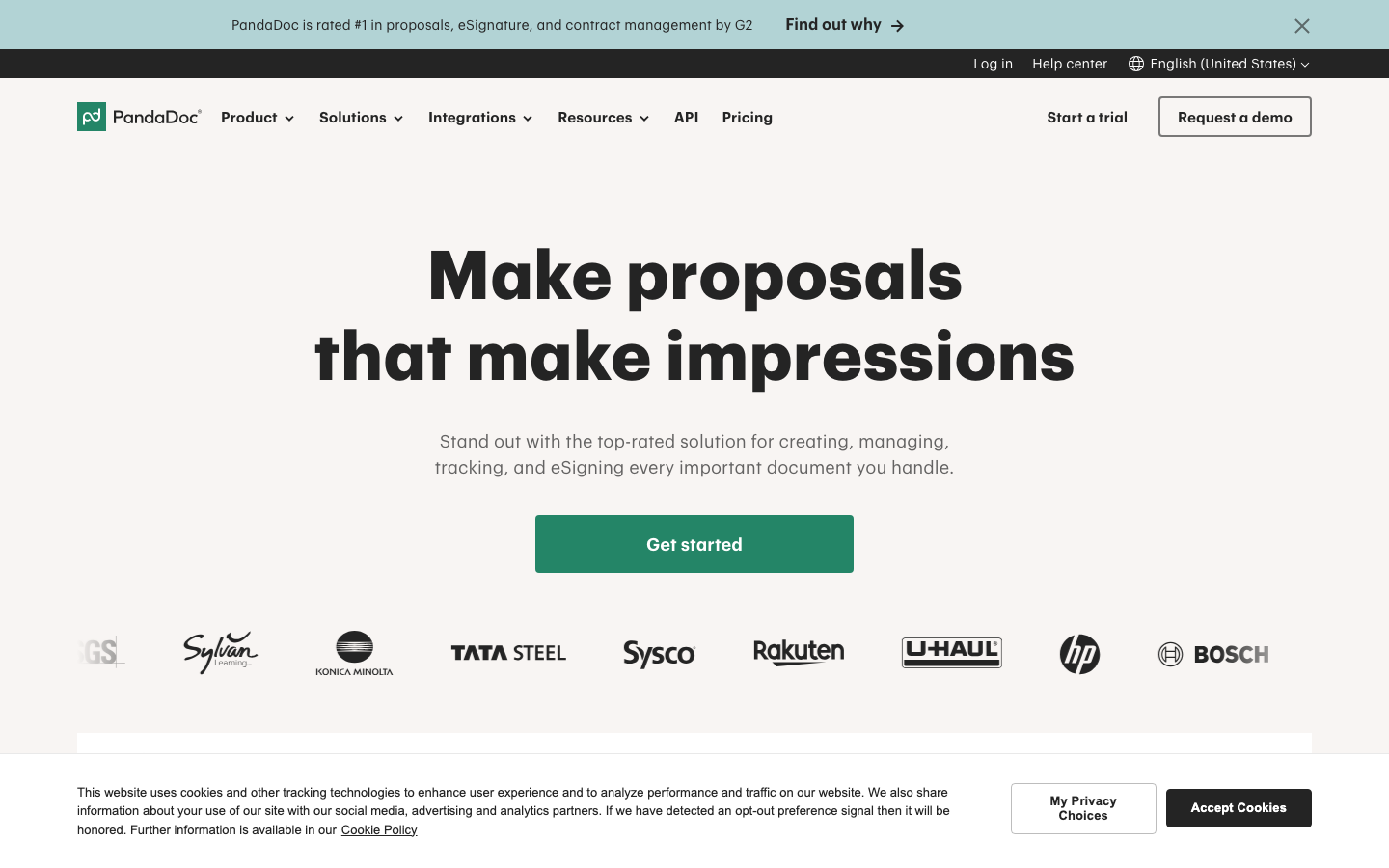 PandaDoc: proposals, e-signature, and contract management
PandaDoc is built around the proposal-to-close motion inside a CRM. It bundles document creation, e-signature, and CRM integrations into a single sales process.
What PandaDoc does well:
- Strong template library for proposals, quotes, and contracts
- Native integrations with HubSpot, Salesforce, and Pipedrive
- Document analytics that show when a prospect opens or hovers on pricing
- Payment collection alongside signature
What PandaDoc doesn't do: PandaDoc is sales-shaped. If your use case is HR forms, vendor onboarding, internal approvals, or ops paperwork, you are paying for proposal features you will never touch. The Starter plan caps you at 110 documents per year (around 9 a month), and meaningful capabilities are gated to the Business plan.
Pricing: Free plan (5 documents/mo), Starter $19/user/mo (annual), Business $49/user/mo (annual), Enterprise custom.
Best for: Sales teams sending proposals, quotes, and order forms inside a CRM-driven motion.
The tradeoff vs. Qwilr: You gain CRM-native templates, native integration with HubSpot and Salesforce, and payment collection alongside signature. You give up Qwilr's design-forward, web-page proposal output for a more traditional document format that some buyers (and procurement teams) prefer.
Read the full guide: 5 Best PandaDoc Alternatives (2026)
4. Documenso: Best Open-Source Alternative
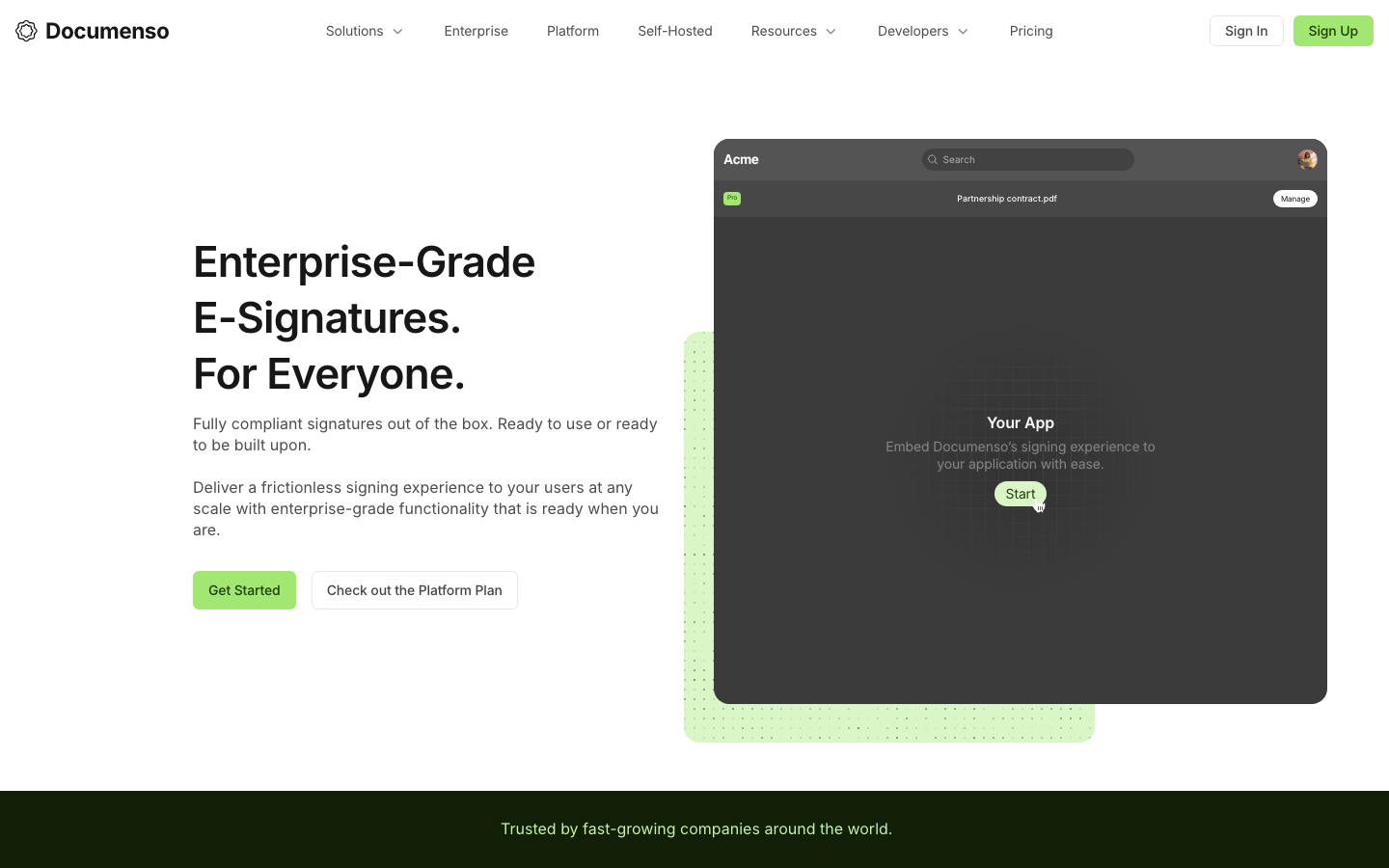 Documenso: enterprise-grade e-signatures, open source
Documenso is the open-source answer to Qwilr, PandaDoc, and DocuSign. You can self-host it, audit the code, and avoid per-seat pricing entirely.
What Documenso does well:
- Fully open-source and self-hostable
- No per-envelope or per-seat fees on self-hosted plans
- Clean, modern signing UX
- Transparent roadmap and active community
What Documenso doesn't do: Documenso is focused on the signature primitive. Multi-recipient routing, structured data capture, proposal building, and integrations are limited or DIY. Self-hosting also means you own uptime, compliance, and security posture, which is a real cost even if the software is free.
Pricing: Free self-hosted. Hosted plans start at $25/mo (Individual).
Best for: Engineering-led teams who want to own their stack and avoid per-seat pricing entirely.
The tradeoff vs. Qwilr: You gain open-source self-hosting, code-level auditability, and cost predictability with no per-seat math. You give up every proposal-specific feature; Documenso is a signature tool, not a proposal tool.
Read the full guide: 5 Best Documenso Alternatives (2026)
5. Agree: Best for Contract-to-Cash Automation
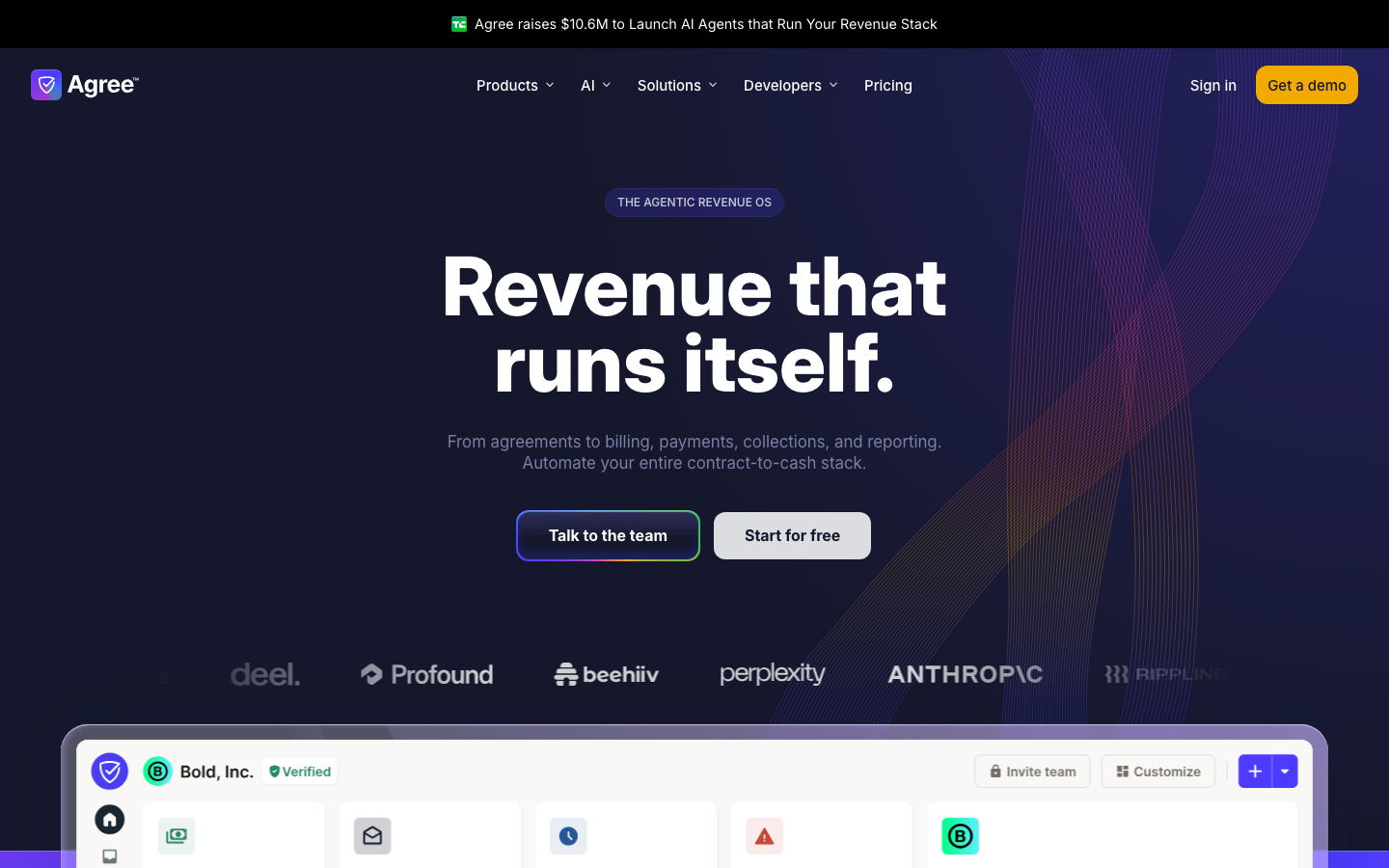 Agree: the Agentic Revenue OS, from agreements to billing and collections
Agree is positioning itself as "the Agentic Revenue OS," not just an e-signature tool. The pitch is end-to-end: agreements, billing, payments, collections, and reporting in one stack, with AI agents in the loop.
What Agree does well:
- Bundles e-signature, billing, payments, and collections into a single platform
- AI agents that automate contract-to-cash steps that other tools leave to humans
- Modern, well-designed product with serious recent funding ($10.6M raise)
- Used by high-growth teams (Stripe, Meta, Anthropic, Rippling appear on their site)
- Free Starter tier available
What Agree doesn't do: Agree is opinionated about the full revenue stack. If you only need a clean e-signature primitive and you already have billing, AR, and ops tooling you like, Agree is more platform than you want. It is also newer than the incumbents, which procurement teams may still default to.
Pricing: Free Starter tier. Next paid plan is $599/mo (Growth), with no published tier in between.
Best for: Revenue-led teams who want agreements, billing, and collections automated together rather than stitched across three tools.
The tradeoff vs. Qwilr: You gain a far more ambitious scope, with billing and collections in the same stack as the signature. You give up Qwilr's design-forward proposal experience entirely; Agree is a revenue platform, not a proposal tool.
Read the full guide: 5 Best Agree.com Alternatives (2026)
The Information Inside Your Contracts
The deeper question behind every Qwilr alternative is what you want a signed document to be. If a signed document is just a finished web page or PDF in a folder, most alternatives will feel like overkill. If a signed document is a record of what your business agreed to (payment terms, renewal dates, parties, amounts, obligations), you want a tool that reads what's inside and gives that information back to your team.
That is why Popform exists. Documents contain the most important information about how your business operates and grows. A signed copy should not be the moment that information disappears into a PDF. It should be the moment your team gets it back.
How to Choose a Qwilr Alternative
- If price is the main problem. Look at Popform ($11/user/mo against Qwilr's $35) or Documenso (self-hosted) to get out from under Qwilr's pricing.
- If you still want proposal-builder features but on a different model. PandaDoc is the closest competitor on proposal tooling, with deeper CRM integration but less design polish.
- If you need an enterprise-recognized e-sign brand. DocuSign remains the default for procurement teams that want a named incumbent.
- If you want agreements, billing, and collections in one stack. Agree is the most ambitious bet here, with AI agents automating the full contract-to-cash flow.
- If you want AI to handle the setup tax and pull the key terms out of every signed agreement. Popform is built for this. Upload existing PDFs, get clean field detection and term extraction, $11/user/mo.
- If you want to run contracts from Claude or ChatGPT. Connect the Popform MCP, then draft, send, and look up agreements by asking. It is included in the $11/user/mo plan.
- If you need full CLM (redlining, clause libraries, negotiation). None of these are the right answer. Look at Ironclad, LinkSquares, or a dedicated CLM, with Popform downstream for signature and everything after it.
Bottom Line
Qwilr is the right tool for one specific kind of work: design-forward, interactive proposals where the buyer-side experience is part of how you win. For that job, nothing in this list beats it. But most teams send more than proposals, and Qwilr's per-seat pricing and proposal-first product do not stretch well to NDAs, vendor agreements, hiring docs, and the routine paperwork that runs a small company.
If you are sending a mix of documents and want AI to do the setup work at a lower price per user, start with Popform. Bring your existing PDFs or draft from a prompt, let AI handle the setup, and get the information back that you used to lose the moment a contract was signed.
More Comparison Guides
Looking at other tools in the category? Popform has a full alternatives guide for each:
- 5 Best DocuSign Alternatives (2026)
- 5 Best Adobe Sign Alternatives (2026)
- 5 Best HelloSign Alternatives (2026)
- 5 Best Dropbox Sign Alternatives (2026)
- 5 Best SignNow Alternatives (2026)
- 5 Best PandaDoc Alternatives (2026)
- 5 Best Proposify Alternatives (2026)
- 5 Best Documenso Alternatives (2026)
- 5 Best Agree.com Alternatives (2026)
FAQs
What is the best alternative to Qwilr for proposals?
PandaDoc is the closest direct competitor on proposal tooling, with deeper CRM integration but less design polish. If proposal design is the primary reason you use Qwilr today, PandaDoc is the most apples-to-apples switch. If proposals are only part of what you send, Popform handles the broader document mix at a fraction of the price.
How does Qwilr compare to PandaDoc?
Qwilr leads on design and buyer-side experience (interactive web pages, embedded media, ROI calculators). PandaDoc leads on CRM integration depth (HubSpot, Salesforce, Pipedrive) and the all-in-one sales motion. Qwilr's proposal output is more visually compelling. PandaDoc's output is more familiar to procurement teams that expect a PDF.
Can I send Qwilr-style proposals from another tool?
Not exactly. The interactive web-page format is Qwilr's defining feature, and no other tool in this list replicates it precisely. PandaDoc gets you a polished PDF proposal with strong analytics. For most documents (contracts, NDAs, vendor agreements) the Qwilr-style experience is not what buyers expect anyway.
What is the cheapest Qwilr alternative?
Popform at $11 per user per month is the lowest-priced managed alternative in this list without an envelope cap. Documenso is cheaper if self-hosted. Both side-step Qwilr's per-seat scaling, which adds up quickly once a team grows past three or four users.
Why are people leaving Qwilr?
Two main reasons. First, per-seat pricing scales linearly with the team, and Qwilr is overkill for the documents that are not proposals. Second, the web-page format does not fit every buyer; some procurement teams still want a PDF they can file, redline, and attach to a vendor record.
Which Qwilr alternative works with ChatGPT or Claude?
Popform. The Popform MCP connects your account to Claude, ChatGPT, Grok, Perplexity, and Mistral. From there you can ask your assistant to draft a document, send it for signature, check whether it has been signed, or answer questions such as what a contract is worth and when it renews. It is included in the $11/user/mo plan.
Does Qwilr have a free plan?
Qwilr offers a 14-day free trial, but no permanent free tier. The lowest paid plan is Starter at $35 per user per month billed annually ($49 monthly). For solo operators or very small teams, that price point is often the deciding factor in looking at alternatives.
Related articles
6 Best SignOwl Alternatives (2026)
SignOwl is a clean, mobile-first e-signature tool, but its free plan is tiny and its AI stops at field placement. Here are the 6 best SignOwl alternatives in 2026.
16 min read
5 Best Adobe Sign Alternatives (2026)
Adobe Acrobat Sign is great if you live in Acrobat, but the per-seat price and transaction caps push teams elsewhere. Here are the 5 best Adobe Sign alternatives in 2026.
14 min read
5 Best Dropbox Sign Alternatives (2026)
Dropbox Sign (formerly HelloSign) is clean and focused, but the per-seat pricing climbs fast for small teams. Here are the 5 best Dropbox Sign alternatives in 2026.
14 min read